
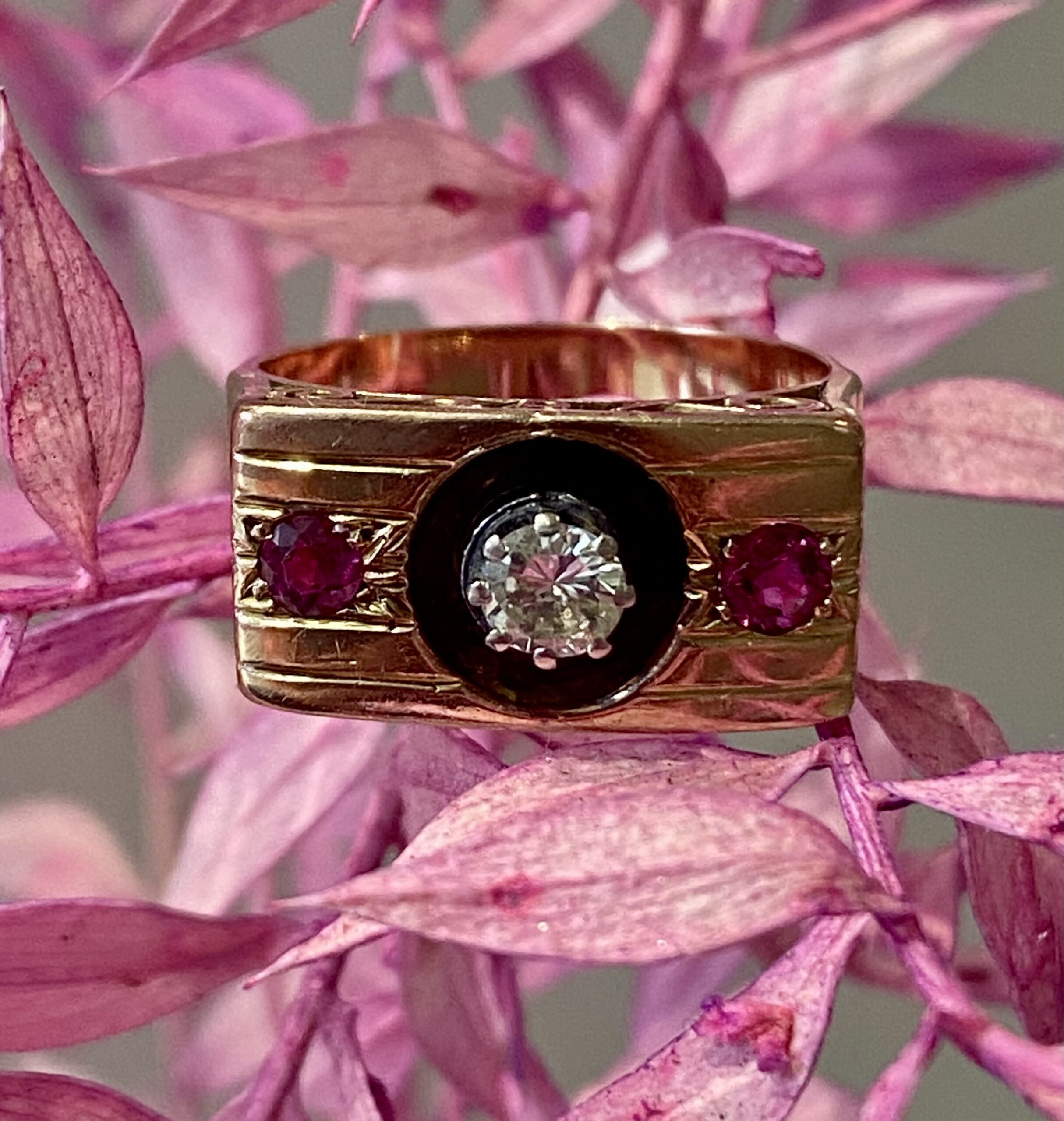
Retro Jewellery: A Complete Buyers Guide (1939–1955)
A Celebration of Post-War Glamour and Bold Design
After years of wartime austerity, the world was ready to shimmer again. The Retro period:- roughly 1939 to the mid-1950s, ushered in an era of confidence, colour, and exuberant design. Where Art Deco had been precise and architectural, Retro was sculptural and joyous. Jewellers embraced curves, movement, and gold in abundance.
At Anadej, we like to think that Retro jewellery tells a story of resilience meeting glamour. It is bold yet romantic, and still wonderfully wearable today.
The Retro Period: The Return of Glamour
Born in wartime scarcity and flourishing in post-war optimism, Retro jewellery reflects both practicality and aspiration. Platinum was requisitioned for the war effort, so jewellers turned back to gold; yellow, rose, and even red tones. After years of restraint, fashion and film inspired a return to femininity and flourish.
Hollywood’s influence was immense. Stars like Rita Hayworth and Lauren Bacall embodied a new kind of sophistication, their jewellery was as dramatic as their silhouettes. The result was the Cocktail Era: bold, voluminous, and joyfully expressive. We love it!
Defining Characteristics of Retro Jewellery
Retro design is instantly recognisable for its sense of movement and optimism. Common motifs include:
- Ribbons, bows, and scrolls – soft, sculptural forms symbolising grace and renewal.
- Fans, flowers, and starbursts – lively motifs echoing the glamour of the silver screen.
- Curves and coils – replacing Art Deco’s angular geometry with warmth and abundance.
- Three-dimensional goldwork – often solid and substantial in weight.
Retro pieces were meant to stand out, not whisper. They are a confident expression of individuality after years of restraint.
Gemstones and Materials of the Retro Era
With platinum scarce, jewellers worked primarily in yellow and rose gold, sometimes blending the two for contrast. White gold made occasional appearances post-war, once materials became more available.
Gemstones took on a new vibrancy:
- Rubies, sapphires, and diamonds remained the core trio, often clustered or calibré-cut.
- Semi-precious stones like citrine, aquamarine, topaz, and amethyst became fashionable, their large cuts perfect for bold designs.
- Synthetic stones offered affordable glamour, especially during the early 1940s.
- Small diamond accents were often pavé-set into gold ribbons or scrolls, adding sparkle without austerity.
The overall effect? A radiant interplay of warm gold and saturated colour.
Types of Retro Jewellery
Rings
The iconic cocktail ring was born in this era. Large, dramatic, and designed for parties. Oversized coloured stones were often framed by curling gold ribbons or sprays of small diamonds.
Bracelets
Wide, solid gold tank or brick-link bracelets reflected the industrial aesthetics of the time. Some incorporated gemstones or geometric panels, others relied purely on sculptural metalwork.
Brooches
One of the most expressive forms of the period. Floral sprays, bows, fans, and stylised birds were favourites, often richly dimensional. Convertible pieces, for example, brooches that became pendants or clips echoed Art Deco’s practical elegance.
Necklaces
Shorter, more sculptural styles replaced the long sautoirs of the 1920s. Bold gold chains, collars, and “gas pipe” designs became signatures of the era.
Earrings
Curved scrolls, fans, and floral motifs dominated. Post-war designs began to move upward again, with clip fittings replacing earlier drops.
Craftsmanship and Innovation
Retro jewellery was a triumph of design ingenuity. Jewellers reimagined traditional techniques to work with wartime limitations, particularly the lack of platinum. There was also a lot of experimentation of new mechanical joints, spring clasps, and flexible link systems.
The artistry lies in the engineering: the way gold twists and loops like fabric, or how a heavy bracelet still moves gracefully on the wrist.
Famous Designers and Jewellers
Several houses defined the Retro look:
- Van Cleef & Arpels – famed for their Passe-Partout jewels, transformable from bracelet to necklace to brooch.
- Cartier – sculptural gold designs set with rubies, sapphires, and diamonds.
- Boucheron – extravagant floral and bow motifs.
- Tiffany & Co. – refined American interpretations of the Cocktail style.
- Chaumet, Mauboussin, and Bulgari – combining Parisian flair and Mediterranean warmth.
- British makers such as Andrew Grima, Michael Bolton (no, not the singer!) and Wendy Ramshaw, reflected the return to craftsmanship, with a distinctive British elegance and panache.
Collecting and Identifying Retro Jewellery
Retro pieces are easy to fall in love with and are equally rewarding to collect. Look for:
- Weight and construction: Retro gold is substantial, with a luxurious feel.
- Hallmarks: Commonly 14ct or 18ct gold; French and British marks are especially desirable.
- Gem setting: Stones often sit high in raised, curling mounts.
- Design language: Soft curves, volumetric forms, and a sense of movement.
- Authentic wear: A gentle patina on gold, not a mirror-polished modern shine.
Genuine Retro pieces have both craftsmanship and character and a sense of history that modern reproductions rarely achieve.
Caring for Retro Jewellery
- Store gold pieces separately to prevent scratches.
- Avoid ultrasonic cleaners, especially for gem-set items.
- Clean gently with warm water and mild soap.
- Have clasps, hinges, and spring mechanisms checked regularly — they are integral to design and movement.
Related Eras
Retro jewellery sits beautifully between Art Deco and Mid-Century Modern design.
- From Deco, it inherited elegance and precision.
- From the modern era, it anticipated creativity and freedom.
The result is jewellery that feels both nostalgic and surprisingly contemporary.
FAQs
What years define the Retro period?
Roughly 1939 to the mid-1950s.
What metals are typical of Retro jewellery?
Mainly yellow and rose gold, with occasional white gold accents.
What gemstones were popular?
Rubies, sapphires, diamonds, citrines, aquamarines, topaz, and amethyst.
How can I tell if a piece is genuine Retro jewellery?
Look for weighty gold, curved sculptural shapes, and signs of age-appropriate wear.
Is Retro jewellery valuable?
Yes, it’s increasingly sought after, particularly signed pieces by Cartier, Van Cleef & Arpels, and Boucheron.
Explore Our Collection
At Anadej, we have a relatively limited Retro jewellery collection which focuses on exquisite rings that capture the drama and glamour of the 1940s and 1950s. Each piece tells a story with bold, sculptural gold designs, set with vivid gemstones that reflect the optimism of the post-war years.
Whether you’re drawn to a sweeping rose gold ribbon ring or a statement cocktail piece glowing with aquamarine or citrine, every item in our collection has been chosen for its craftsmanship and character.
Discover the joy of Retro design: timeless, radiant, and unmistakably individual.