Posted on

Retro Jewellery – A Buyers Guide

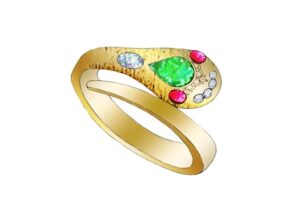
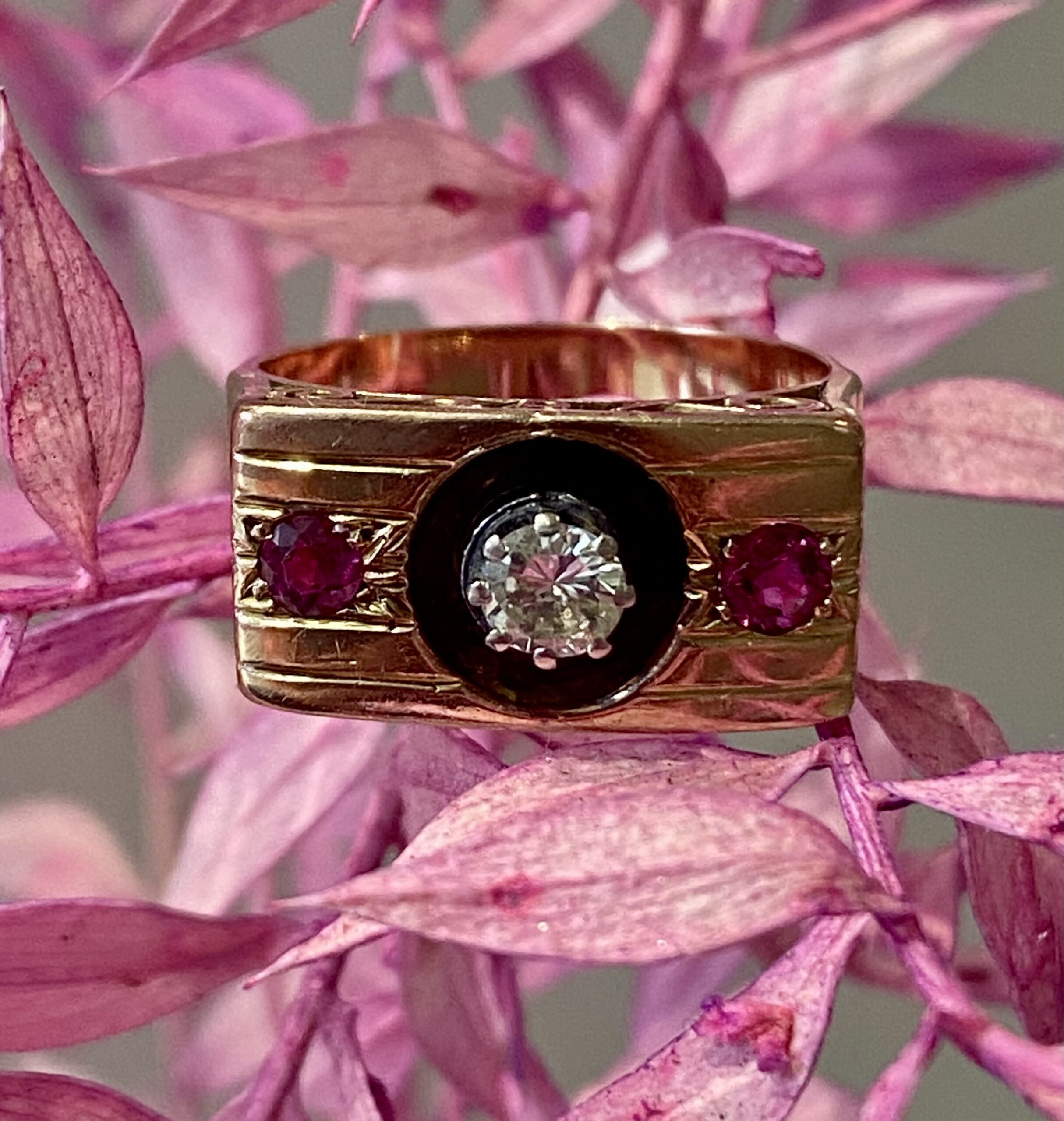
Retro Diamond and Ruby Tank Ring - Anadej

Retro Jewellery: A Complete Buyers Guide (1939–1955)

A Celebration of Post-War Glamour and Bold Design

After years of wartime austerity, the world was ready to shimmer again. The Retro period:- roughly 1939 to the mid-1950s, ushered in an era of confidence, colour, and exuberant design. Where Art Deco had been precise and architectural, Retro was sculptural and joyous. Jewellers embraced curves, movement, and gold in abundance.

At Anadej, we like to think that Retro jewellery tells a story of resilience meeting glamour. It is bold yet romantic, and still wonderfully wearable today.

The Retro Period: The Return of Glamour

Born in wartime scarcity and flourishing in post-war optimism, Retro jewellery reflects both practicality and aspiration. Platinum was requisitioned for the war effort, so jewellers turned back to gold; yellow, rose, and even red tones. After years of restraint, fashion and film inspired a return to femininity and flourish.

Hollywood’s influence was immense. Stars like Rita Hayworth and Lauren Bacall embodied a new kind of sophistication, their jewellery was as dramatic as their silhouettes. The result was the Cocktail Era: bold, voluminous, and joyfully expressive. We love it!

Defining Characteristics of Retro Jewellery

Retro design is instantly recognisable for its sense of movement and optimism. Common motifs include:

  • Ribbons, bows, and scrolls – soft, sculptural forms symbolising grace and renewal.
  • Fans, flowers, and starbursts – lively motifs echoing the glamour of the silver screen.
  • Curves and coils – replacing Art Deco’s angular geometry with warmth and abundance.
  • Three-dimensional goldwork – often solid and substantial in weight.

Retro pieces were meant to stand out, not whisper. They are a confident expression of individuality after years of restraint.

Gemstones and Materials of the Retro Era

With platinum scarce, jewellers worked primarily in yellow and rose gold, sometimes blending the two for contrast. White gold made occasional appearances post-war, once materials became more available.

Gemstones took on a new vibrancy:

  • Rubies, sapphires, and diamonds remained the core trio, often clustered or calibré-cut.
  • Semi-precious stones like citrine, aquamarine, topaz, and amethyst became fashionable, their large cuts perfect for bold designs.
  • Synthetic stones offered affordable glamour, especially during the early 1940s.
  • Small diamond accents were often pavé-set into gold ribbons or scrolls, adding sparkle without austerity.

The overall effect? A radiant interplay of warm gold and saturated colour.

Types of Retro Jewellery

Rings

The iconic cocktail ring was born in this era. Large, dramatic, and designed for parties. Oversized coloured stones were often framed by curling gold ribbons or sprays of small diamonds.

Bracelets

Wide, solid gold tank or brick-link bracelets reflected the industrial aesthetics of the time. Some incorporated gemstones or geometric panels, others relied purely on sculptural metalwork.

Brooches

One of the most expressive forms of the period. Floral sprays, bows, fans, and stylised birds were favourites, often richly dimensional. Convertible pieces, for example,  brooches that became pendants or clips echoed Art Deco’s practical elegance.

Necklaces

Shorter, more sculptural styles replaced the long sautoirs of the 1920s. Bold gold chains, collars, and “gas pipe” designs became signatures of the era.

Earrings

Curved scrolls, fans, and floral motifs dominated. Post-war designs began to move upward again, with clip fittings replacing earlier drops.

Craftsmanship and Innovation

Retro jewellery was a triumph of design ingenuity. Jewellers reimagined traditional techniques to work with wartime limitations, particularly the lack of platinum. There was also a lot of experimentation of new mechanical joints, spring clasps, and flexible link systems.

The artistry lies in the engineering: the way gold twists and loops like fabric, or how a heavy bracelet still moves gracefully on the wrist.

Famous Designers and Jewellers

Several houses defined the Retro look:

  • Van Cleef & Arpels – famed for their Passe-Partout jewels, transformable from bracelet to necklace to brooch.
  • Cartier – sculptural gold designs set with rubies, sapphires, and diamonds.
  • Boucheron – extravagant floral and bow motifs.
  • Tiffany & Co. – refined American interpretations of the Cocktail style.
  • Chaumet, Mauboussin, and Bulgari – combining Parisian flair and Mediterranean warmth.
  • British makers such as Andrew Grima, Michael Bolton (no, not the singer!) and Wendy Ramshaw, reflected the return to craftsmanship, with a distinctive British elegance and panache.

Collecting and Identifying Retro Jewellery

Retro pieces are easy to fall in love with and are equally rewarding to collect. Look for:

  1. Weight and construction: Retro gold is substantial, with a luxurious feel.
  2. Hallmarks: Commonly 14ct or 18ct gold; French and British marks are especially desirable.
  3. Gem setting: Stones often sit high in raised, curling mounts.
  4. Design language: Soft curves, volumetric forms, and a sense of movement.
  5. Authentic wear: A gentle patina on gold, not a mirror-polished modern shine.

Genuine Retro pieces have both craftsmanship and character and a sense of history that modern reproductions rarely achieve.

Caring for Retro Jewellery

  • Store gold pieces separately to prevent scratches.
  • Avoid ultrasonic cleaners, especially for gem-set items.
  • Clean gently with warm water and mild soap.
  • Have clasps, hinges, and spring mechanisms checked regularly — they are integral to design and movement.

Related Eras

Retro jewellery sits beautifully between Art Deco and Mid-Century Modern design.

  • From Deco, it inherited elegance and precision.
  • From the modern era, it anticipated creativity and freedom.
    The result is jewellery that feels both nostalgic and surprisingly contemporary.

FAQs

What years define the Retro period?
Roughly 1939 to the mid-1950s.

What metals are typical of Retro jewellery?
Mainly yellow and rose gold, with occasional white gold accents.

What gemstones were popular?
Rubies, sapphires, diamonds, citrines, aquamarines, topaz, and amethyst.

How can I tell if a piece is genuine Retro jewellery?
Look for weighty gold, curved sculptural shapes, and signs of age-appropriate wear.

Is Retro jewellery valuable?
Yes,  it’s increasingly sought after, particularly signed pieces by Cartier, Van Cleef & Arpels, and Boucheron.

Explore Our Collection

At Anadej, we have a relatively limited Retro jewellery collection which focuses on exquisite rings that capture the drama and glamour of the 1940s and 1950s. Each piece tells a story with bold, sculptural gold designs, set with vivid gemstones that reflect the optimism of the post-war years.

Whether you’re drawn to a sweeping rose gold ribbon ring or a statement cocktail piece glowing with aquamarine or citrine, every item in our collection has been chosen for its craftsmanship and character.

Discover the joy of Retro design:  timeless, radiant, and unmistakably individual.
Posted on

Art Deco Jewellery – A Buyers Guide

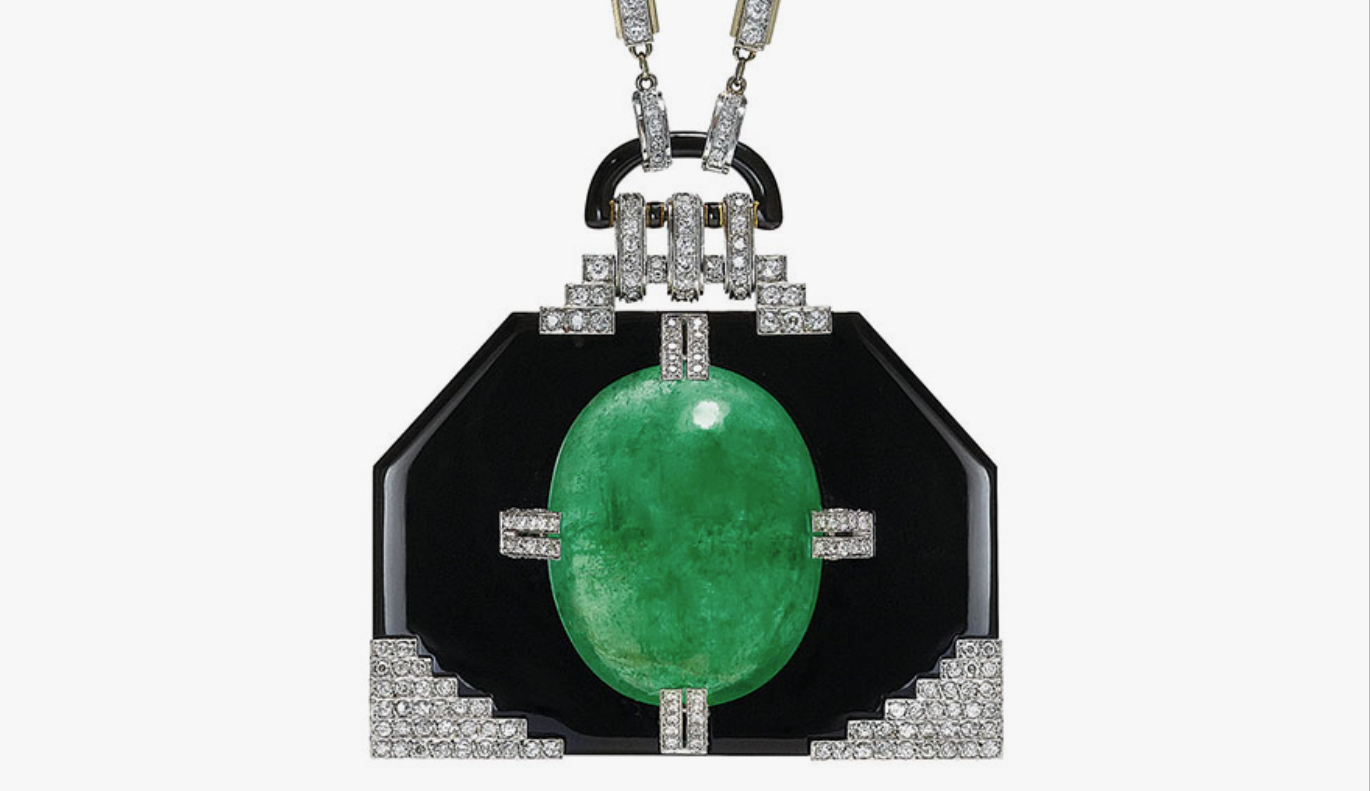
An important emerald, onyx and diamond pendant necklace by Georges Fouquet - (c)Christies

Art Deco Jewellery: A Complete Buyer’s Guide (1920–1940)

Few design movements have left such a lasting impression as Art Deco. From the clean lines of modern architecture to the glittering glamour of 1920s jewellery, Art Deco celebrates confidence, craftsmanship and the joy of modernity.

At Anadej, it remains one of our favourite eras. Every piece tells a story of innovation, resilience and exquisite design, and it continues to inspire collectors around the world. Whether you’re new to antique jewellery or expanding your collection, this guide will help you appreciate the beauty and significance of authentic Art Deco pieces.

The Art Deco Era: 1920–1940

The Art Deco period emerged after the First World War, when the world longed for renewal. Social change was rapid: women had entered the workforce, fashion became freer, and society embraced a new sense of energy and independence. Jewellery mirrored that shift.

Gone were the flowing curves of Art Nouveau and the delicate lacework of Edwardian design. In their place came geometry, proportion and bold colour. These were jewels made for modern women who lived with confidence and style.

What Defines Art Deco Jewellery

Art Deco jewellery is instantly recognisable by its harmony of structure and sparkle. Inspired by the precision of modern design, it was still meticulously handcrafted.

Typical features include strong geometric forms such as zigzags, chevrons and sunbursts, balanced symmetry and striking contrasts of colour. Platinum and white gold were favoured for their cool brilliance, setting off diamonds and coloured gems to perfection.

True Art Deco design feels architectural, balanced and unmistakably elegant.

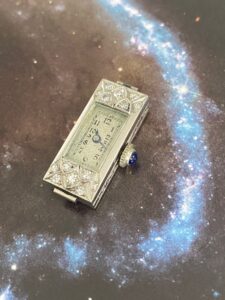
Art Deco Diamond and Platinum Watch Head - Anadej
Art Deco Diamond and Platinum Watch Head – Anadej @anadej.jewellery
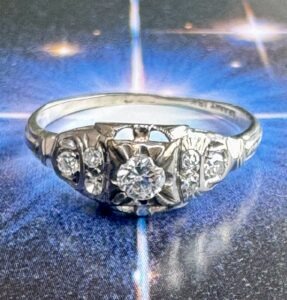
Art Deco Diamond Ring - Granat Brothers - 18ct White Gold
Art Deco Diamond Ring – Granat Brothers – 18ct White Gold


Motifs and Global Influences

The 1920s were a time of exploration and discovery, and jewellers drew inspiration from many cultures and artistic movements.

Egyptian motifs flourished after the discovery of Tutankhamun’s tomb in 1922, with scarabs, lotus flowers and pyramid forms appearing across Europe. Designers were also fascinated by Japanese lacquer work, Chinese jade carving and the vibrant colours of Indian gemstones. Movements such as Cubism and the Bauhaus encouraged abstraction and geometry.

Together these influences created jewellery that felt both ancient and modern – a perfect reflection of the Jazz Age.

Gemstones and Metals of the Art Deco Period

Art Deco jewellery combined technical innovation with opulent materials.

Metals
Platinum became the metal of choice, valued for its strength and ability to hold intricate designs. As it grew expensive, white gold rose in popularity, while silver and chrome appeared in bold costume pieces.

Gemstones
Diamonds dominated, especially in emerald and baguette cuts. Coloured stones brought vibrancy: emeralds, sapphires, rubies, jade and coral were particularly admired. Onyx, rock crystal and enamel provided dramatic black-and-white contrast. Synthetic rubies, sapphires and even bakelite allowed for more accessible designs without sacrificing style.

Collectors often look for calibré-cut gemstones, where tiny, precisely cut stones fit seamlessly together in mosaic-like patterns – a hallmark of the era’s craftsmanship.

Types of Art Deco Jewellery

Rings
Statement rings defined the era. Large coloured gemstones were surrounded by geometric arrangements of diamonds, often in platinum settings. Millgrain edging and fine filigree work added delicate detail.

Necklaces
The sautoir epitomised Deco glamour: long strands ending in tassels or pendants, often tied loosely at the front or draped down the back. Multi-strand pearl or bead necklaces with diamond plaques were popular day-to-evening choices.

Bracelets
Wide bangles and articulated panels reflected the linear style of the time. Repeating patterns of gemstones and enamel created a sense of rhythm and movement.

Earrings
Early Deco earrings were long and elegant, designed to complement short hairstyles. By the 1930s, clip earrings that sat neatly on the earlobe became fashionable. Many designs were cleverly adaptable, doubling as dress clips or brooches.

Brooches and Dress Clips
Brooches were essential accessories, worn on lapels, hats and handbags. Dress clips could be worn singly or paired together for a larger statement.

Hair Ornaments
While tiaras remained for formal occasions, the more relaxed bandeau became the choice for modern women. These were often convertible, designed to transform into bracelets or necklaces.

Craftsmanship and Innovation

The Art Deco era was a time of remarkable technical progress.

Van Cleef & Arpels introduced the mystery setting (serti invisible), where gemstones appear to float without visible metal. Gem cutters developed shield, hexagon and calibré shapes that allowed for intricate, seamless designs.

Cartier led with platinum and diamond creations of exceptional precision. Tiffany & Co. brought Deco elegance to the American market, while Georges Fouquet’s emerald and onyx designs embodied French sophistication. Each genuine Art Deco piece feels like a small feat of engineering, a perfect balance between artistry and structure.

British Art Deco Designers

Britain’s contribution to Art Deco jewellery had its own character – refined, inventive and distinctly modern.

Notable names include H.G. Murphy, whose silver and gold work reflected sculptural simplicity; Bernard Instone, known for his elegant, colourful designs; and The Artificers’ Guild, whose craftsmanship bridged the Arts & Crafts tradition with early modernism.

Their creations helped shape a uniquely British interpretation of the Art Deco aesthetic, combining tradition with the excitement of new design.

Collecting and Identifying Authentic Art Deco Pieces

When evaluating Art Deco jewellery, craftsmanship is the key indicator. Look for precise symmetry, clean lines and quality materials. Platinum or white gold mountings, step-cut diamonds and fine handwork are strong signs of authenticity.

Hallmarks can reveal a piece’s origin and maker, while gentle, consistent wear supports its age. Be cautious of modern reproductions: they may echo the style but rarely capture the depth and refinement of original designs.

Caring for Art Deco Jewellery

Antique jewellery deserves careful attention. Clean pieces gently with mild soap and warm water, and dry with a soft cloth. Avoid ultrasonic cleaners, which can loosen old settings. Have platinum or gemstone pieces checked annually by a trusted jeweller, and store each item separately to prevent scratches.

For valuable pieces, consider insurance that reflects their current replacement value.

Famous Designers and Makers

  • Cartier – masters of platinum and diamond precision
  • Van Cleef & Arpels – pioneers of the mystery setting
  • Tiffany & Co. – leaders of American Deco glamour
  • Georges Fouquet – known for bold colour contrasts and strong geometry
  • René Lalique – transitioned gracefully from Art Nouveau to Deco
  • H.G. Murphy and Bernard Instone – leading figures in British Art Deco design

FAQs

What years define the Art Deco jewellery period?
Approximately 1920 to 1940, overlapping with the later Edwardian and early vintage eras.

How can I tell if a piece is genuine Art Deco?
Look for symmetry, step-cut gemstones, platinum or white gold, and subtle wear that reflects its age.

Are all Art Deco pieces considered antique?
Yes. Early 1920s designs are now over a century old, while late 1930s pieces are classed as vintage.

Which gemstones are most typical?
Diamonds, sapphires, emeralds, rubies, jade, onyx and coral, often used in bold colour contrasts.

How should I care for my Art Deco ring?
Clean gently with mild soap and water, avoid chemicals and ultrasonic cleaning, and have the settings checked regularly.

Explore Our Collection

At Anadej, we curate an ever-evolving collection of authentic Art Deco jewellery – from diamond sautoirs and statement rings to bracelets and brooches. Each piece captures the optimism and artistry of the Jazz Age, where design met daring innovation. Discover our available Art Deco jewellery here.

Other Resources for more about the Art Deco Era and it’s jewellery

TV:  One of my favourite programmes when I was younger was ‘House of Elliot’ – series 1 can be streamed on Amazon Prime in US.

GIA Article: Can be found on this link.

Books:

Art Nouveau and Art Deco Jewellery: An Identification and Value Guide – Lillian Baker

Authentic Art Deco Jewelry Designs – Franco Daboni

Other Antique Jewellery Buyers Guides:

Georgian Jewellery

Victorian Jewellery 

Art Nouveau Jewellery 

Edwardian Jewellery


Posted on

Edwardian Jewellery – A Buyers Guide

Convertible pendant and brooch by Cartier 1908 at V&A

The Edwardian Period (1901-1914)

Fun fact alert! The Edwardian Era is the last to be named after the ruling British monarch of the time. Although the Edwardian Period overlaps Art Nouveau, each gets treated as its own design period due to their distinctive styles. The Edwardian era, headed by the luxury-loving playboy King Edward V11, was a time of frivolity and wealth. This is especially true for the upper classes, who were often attending balls, dinners and galas. Absolutely a perfect time for showing off beautiful jewels!  It was a time when society was at the height of elegance and the jewellery really exemplified this.


Edwardian rings used open wire designs and filigree work was prevalent and fine milgrain settings became popular too.  Platinum usage surged due to the metal’s unparalleled strength, enabling jewellers to create delicate and lacy mountings, the finer and more intricate the better.  Whilst machine made jewellery was still prevalent for the lower and middle classes, the upper echelons and their jewellers moved back to hand-crafted. Enamelling became immensely popular.


Hand-crafted, well-made individual, rather than mass produced jewellery was back in fashion in the Edwardian era and the style became ethereal and detailed, drawing inspiration from the 18th century. Traditional motifs such as bows, garlands, ribbons and lace and feathers were extremely popular. Edwardian fashionistas particularly loved the intricate style of these delicate-looking pieces.

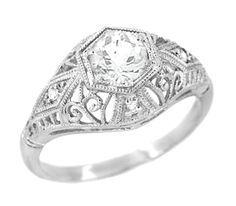
Edwardian-Diamond-Filigree-Engagement-Ring-Pinterest
Edwardian Diamond Filigree Engagement Ring – Pinterest
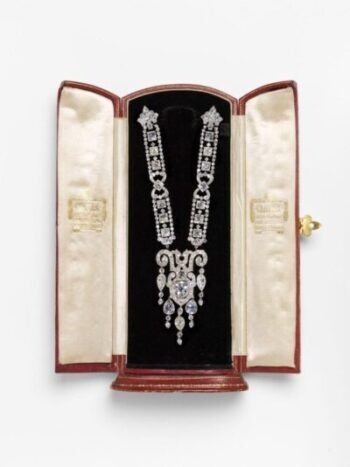
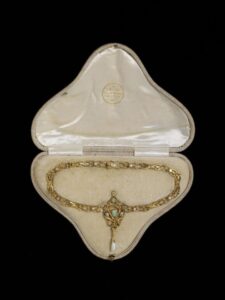
William-Pick-Necklace-in-Case-1913-at-VA
William Pick – Necklace in Case – 1913 – at V&A

Motifs and symbolism in Edwardian Jewellery

Bows, ribbons, garlands, lace, feathers, and anything fine and fancy was the order of the day!

Gem Cutting Styles and Settings in Edwardian Jewellery

Rose, old mine, and old European cuts were the prevalent cuts of the day, but the baguette cut also gained popularity in this era too.

Rings, as mentioned, were detailed, often with a large smattering of diamonds, typically set in platinum with milgrain and filigree settings. Diamond engagement rings really gained popularity in the Edwardian era. Often with a large diamond in the centre, surrounded by a halo of smaller milgrain set diamonds, alternatively delicate filigree diamond rings, with good finger coverage stretching down the finger.

Necklines were changing, becoming more revealing and lower and therefore draping necklaces were becoming fashionable. Sautoirs, lavaliers and interestingly at the other end of the spectrum, chokers were also popular in this period.

Bracelets were often light with flowery designs and were usually worn alone rather than in a stack.

To complement the lower necklines dangly earrings gained popularity in Edwardian times.

Edwardian White Enamel Gate Link Bracelet - Anadej
Edwardian White Enamel Gate Link Bracelet – Anadej
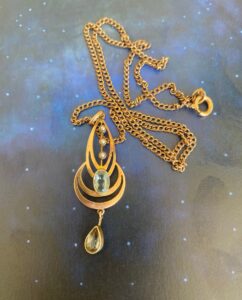
Edwardian Aquamarine and Pearl Lavalier - Anadej
Edwardian Aquamarine and Pearl Lavalier – Anadej

Popular Gemstones in Edwardian Jewellery

Diamonds were used extensively, however interestingly during the Edwardian period, pearls were the more highly prized and indeed expensive gem. A big focus was on white/clear jewellery such as the aforementioned and also moonstone, opals, mother of pearl. That’s not to say that other gemstones weren’t used, but they were often only used as accents. For example, peridot, emeralds, sapphires, rubies, especially Burma rubies were in fashion too.

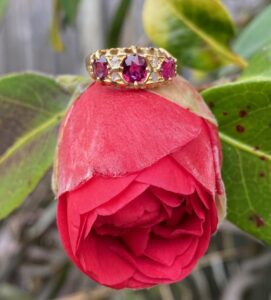
Edwardian Burmese Ruby and Diamond Ring - Anadej
Edwardian Burmese Ruby and Diamond Ring – Anadej
French Belle Epoque Edwardian Diamond Ring 18ct - Anadej
French Belle Epoque Edwardian Diamond Ring 18ct – Anadej
Edwardian Charms in Mother of Peal and Jade - Anadej
Edwardian Charms in Mother of Peal and Jade – Anadej

Metals Used in Edwardian Jewellery

White metals were incredibly popular during the Edwardian era, especially platinum as it is so hard and offered great flexibility for detailed work. White gold and silver was also used as well as rolled gold, and high carat gold (especially 18ct) in all colours.

Other Things of Note for Edwardian Jewellery

Jewellery from the Edwardian Period should have a hallmark as this practice of marking jewellery for metal purity, makers marks, region (assay office) was becoming industry standard at the time (though it must be said that some pieces still don’t have the full spectrum of hallmarks). For UK jewellery the hallmarks are usually placed on the inside of the ring. In other countries the marks may be present on the outside, e.g., French hallmarks are often found outside on the band.

Further Resources for Edwardian Jewellery

  • Starting to Collect Antique Jewellery – John Benjamin
  • Edwardian Fashion – Daniel Milford-Cottom
  • GIA – Edwardian Era Jewellery

For our range of Edwardian Jewellery please visit here, we update our stock all the time, so please visit again!

Other Antique Jewellery Buyers Guides:

Georgian Jewellery

Victorian Jewellery 

Art Nouveau Jewellery 

Art Deco Jewellery

Posted on

Art Nouveau Jewellery – A Buyers Guide

Art Nouveau Ring

The Art Nouveau Period (1890-1915)

Although short in time, the Art Nouveau period was significant in jewellery design and other decorative arts.  Art Nouveau jewellery originated in France, Belgium and other parts of Europe, with influences from Japonisme and was created by a small group of Avant Gard artists. It marked the transformation from the Victorian period in to the modern. In the UK specifically, it was born out of the Arts and Crafts period (1860s-80s) and crossed over the late Victorian aesthetic period and Edwardian era.

In this period jewellers really considered themselves artists and you can see why with the incredibly detailed and flowing style of the jewellery available at this time. You can absolutely see the craftsmanship that has gone into each and every piece. There was a rejection of the mass produced jewellery and a move back to hand crafted pieces with fluid, free-flowing design inspired by the natural world.

It is one of our absolute favourite periods here at Anadej in terms of the jewellery, artwork, architectural design, and homewares that were available at the time.  Indeed, our owner has family connections with Art Nouveau Jewellery specifically, as a great, great niece to Ella Naper.  Ella Naper (nee Champion) was a celebrated artist, potter, designer, and jewellery maker.  She was an active member of the Newlyn School, along with her husband Charles Naper and friends Laura Knight and Harold Knight who she collaborated with often. Ella exhibited at the Arts and Crafts Exhibition, Woman’s Art Exhibition and also sold pieces through Liberty’s of London.  Her pieces are very well regarded and are popular collectors’ items to this day.

Ella Naper Necklace
Silver and Enamel Necklace by Ella Naper – On display at Penlee House.


Motifs and Symbolism in Art Nouveau Jewellery

Art Nouveau jewellery was soft, romantic, and often mystical. Pieces would often include depictions of the natural world, with a focus on the language of flowers. The female form was celebrated too, often blending with elements from insects, like the butterfly or dragonfly, floral motifs, and sometimes other winged creatures like bats!

Fluid lines and a sense of the piece as a whole, rather than disparate elements making up a design, was a key feature in this period. Enamelling gained popularity during this period and plique-a-jour was a popular technique. Plique-à-jour is backless enamel and allows light to come through to give a three-dimensional quality, creating an effect of translucence.

In the Art Nouveau period colours used were more muted and pastel, adding to the dreaminess of the piece.

Art Nouvevau Bat Ring
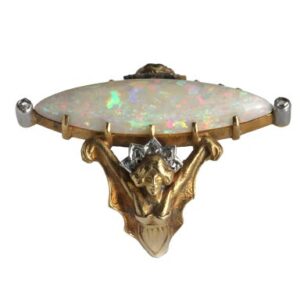
Charles Boutet de Monvel Art Nouveau Opal Diamond Ring – Tadema Gallery – Available via 1st Dibs
Art Nouveau Butterfly Necklace - Art Nouveau Club
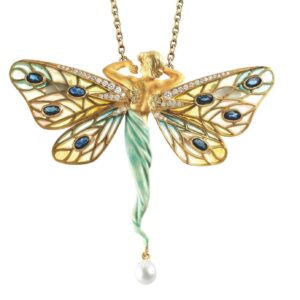
Art Nouveau Butterfly Necklace – Art Nouveau Club


Gem Cutting Styles and Settings in Art Nouveau Jewellery

The settings and styles in Art Nouveau jewellery were often incredibly unique and individual to the piece being created and the gems being used. For diamonds, the cut was usually either the old mine or old European cuts (a forerunner to the modern brilliant cut).

Popular Gemstones in Art Nouveau Jewellery

There wasn’t such a focus on the gem value during the Art Nouveau period, indeed, gems were often used more as an accent to the metal work/settings rather than as the central focus. The value in the piece came from the work and artistry involved. Gems used included; small diamonds, opals, pearls, tourmaline, emeralds, lapis lazuli, moonstone, carnelian, amber and synthetic gems.

We obviously can’t do an article about Art Nouveau Jewellery without mentioning Rene Lalique who was really the founding father  in experimental jewellery craftsmanship, leading the way with new enamelling techniques, putting the artwork above all else.

Rene Lalique Necklace - Musee Lalique (c)
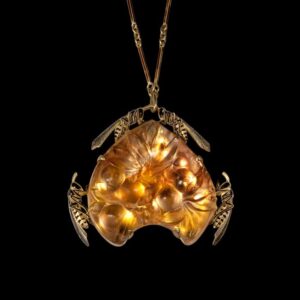
Rene Lalique Necklace – Musee Lalique (c)


Metals Used in Art Nouveau Jewellery

Precious white metal e.g., platinum, white gold, palladium, and silver was used more commonly than yellow or rose gold, however, 14ct and 18ct gold was used during this period.

Our range of Art Nouveau Jewellery

Our range of Art Nouveau jewellery is ever evolving as we find more pieces to bring you joy, our current range can be found here.

Further resources:

  • Ella and Charles Naper and the Lamorna Artists – John Branfield
  • Art Nouveau Jewelry – Vivienne Becker
  • Art Nouveau Club – link 

Other Antique Jewellery Buyers Guides:

Georgian Jewellery

Victorian Jewellery 

Edwardian Jewellery

Art Deco Jewellery

Posted on

Victorian Jewellery – A Buyers Guide

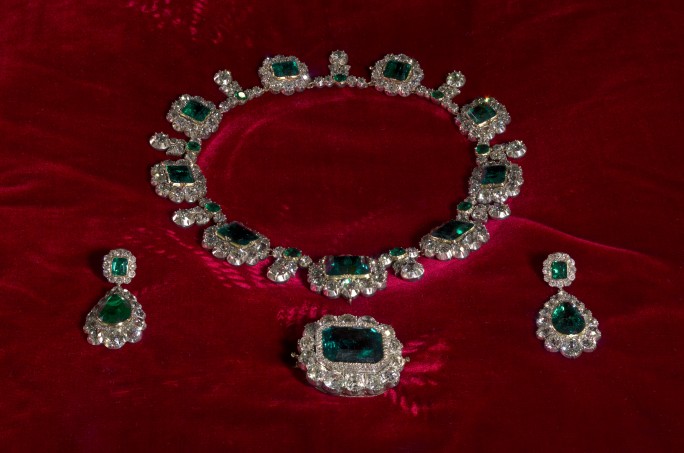
Queen Victoria Emerald and Diamond Parure - Kensington Palace - Historic Royal Palaces

The Victorian Period (1837-1901)

Queen Victoria reigned for a long time as you can see from the dates above! In fact, during her reign there were nine, yes nine Prime Ministers!

It was an era very much based on class with clear divisions in wealth distribution between the classes. During this time, a growing number of people were able to vote, which built individuals’ confidence.  There was also a growing economy and Britain was the most powerful Empire in the world, until the end of the period.

There were huge advancements in technology with the Industrial Revolution. Therefore the ability to produce jewellery at a larger scale and for a greater proportion of the population was made possible.

Jewellery historians usually break this era down into three periods: Early (or Romantic), Mid (or Grand), and Late Victorian (or Aesthetic).  As such, we’ve organised the information in this article to correspond to those periods. You will see that each have individual styles due to shifting moods, technological advancements and discoveries.

Early or Romantic Victorian Jewellery (1837-1860)

The jewellery of the Early Victorian Era reflected the love and hope the young queen had for her husband, Albert (they married in 1840). This era was often characterised by a ‘return to nature’ and alongside the Bible nearly all households had a book for deciphering the language of flowers.  It is said that Queen Victoria fuelled a nationwide and potentially even worldwide love affair with jewellery and its symbolism. Her love of diamonds and turquoise, to name just a couple of her favourite gems, really accelerated their popularity.

The 1840s saw the start of large-scale jewellery manufacturing. However, jewellers were still making many pieces by hand and these pieces are especially sought after in today’s market.

Motifs and symbolism in Early or Romantic Victorian Jewellery

Popular ring motifs included snakes as symbols of eternal love. Prior to their marriage Albert gave Victoria a snake ring with an emerald embedded into it as a symbol of their love. Other fashionable motifs at the time included: angels, love knots, hearts, crosses, clovers and of course flowers. In addition, designs with Greek, Roman or with Celtic influence were popular, as Prince Albert bought Queen Victoria Balmoral Castle in 1852, having leased it in 1848.

Queen Victoria’s Engagement ring from Prince Albert: credit – thehistorypress.co.uk
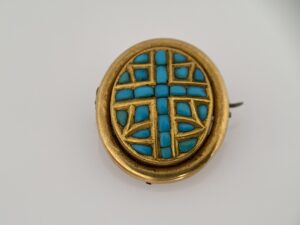
Victorian Turquoise Panel Brooch
Gorgeous Victorian Turquoise Panel Brooch, mounted on 18ct gold, with c clasp fitting. From Anadej.

Gem Cutting Styles and Settings in Early or Romantic Victorian Jewellery

Gems were largely cut as either:

  • rose cut – round shape with a faceted domed top and flat bottom
  • old mine cuts – a forerunner to the old European cut and therefore modern brilliant cut
  • cabochons – smooth domed top flat bottom
  • step cuts – usually for coloured stones forming a series of straight facets that decrease in length as they recede from the girdle and so give the appearance of steps

Collet settings as seen in Georgian jewellery continued during this time, but now with open backs, and claw like prong settings were also used.

Brooches were now commonly secured using the simple ‘C’ clasp, where the pins extended past the body of the brooch (can be seen in image above, back view available on product page).

Popular Gemstones in Early or Romantic Victorian Jewellery

Diamonds, turquoise, pink and gold topaz, coral, ruby and amethyst were all popular gems at the time. Notably people’s birth stones were often included in their engagement ring, leading on from Victoria’s emerald snake ring.

Metals Used in Early or Romantic Victorian Jewellery

A variety of metals were used in Early Romantic Victorian Jewellery, 22ct and more commonly 18ct was popular. However, it should be noted that before the Gold Rush of 1848-55, lower carat golds, gold plating, rolled gold and even gold imitation pinchbeck was used. White gold was not seen during the Early Victorian era, but silver and iron were used.

Mid-Victorian or Grand Period Victorian Jewellery (1860-1885)

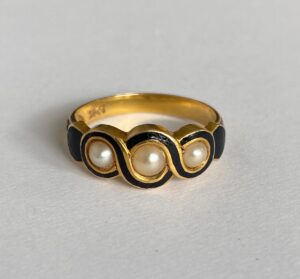
The Mid-Victorian era was particularly tumultuous.  For Queen Victoria it was an incredibly sad period with her beloved husband Albert passing away at the end of 1861. In America the Civil war was raging. The whimsical and romantic period was swept away and, in its place, came the Grand period. Victoria led the charge on mourning jewellery as dark and heavy rings became very fashionable in reflecting a state of mourning.

On a more positive note, a big discovery of diamonds in South Africa led to many jewellers now having access to them and so they were used frequently and there was also the benefit of the incandescent light bulb coming through from 1879, which put diamonds in a whole new and wonderful light, literally!

Motifs and Symbolism in Mid-Victorian or Grand Period Victorian Jewellery

With so much exploration at this time and the discoveries of ancient tombs, Etruscan and Egyptian motifs abounded. Acorns, bees, birds, flowers, geometric patterns, stars and crescent moons were popular symbols during this time.

Victorian Etruscan Revival Brooch
Victorian Etruscan Revival Brooch. From Anadej


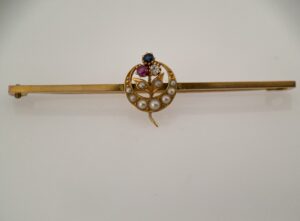
Victorian Flower and Crescent Moon Brooch
Victorian Flower and Crescent Moon Brooch. From Anadej.


Gem Cutting Styles and Settings in Mid-Victorian or Grand Period Victorian Jewellery

Gems were largely cut as above in Early Victorian era, with following addition.

  • cabochons, notably, in the Mid-Victorian or Grand Period, semi-precious gem cabochons, would often house a precious gem at the top. Usually  a diamond or pearl (with a setting running all the way through).


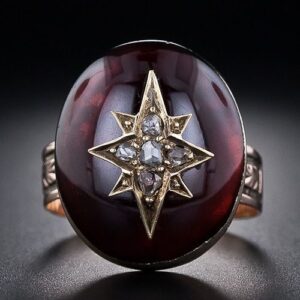
Jewellery was often quite heavy and opulent during this time as the industry was booming due to gold and gemstone discoveries. What we now know as the star-set or gypsy-set rings were now popular, along with pave settings.

A lever catch was added to the ‘C’ settings in brooches to make them more secure as brooches became all the more popular.

Another notable trend was hairwork; which whilst had been used previously had gained popularity and greater level of technique during the Mid-Victorian era.

Victorian Mourning Ring
Victorian Enamel and Pearl Mourning Ring, Victorian Mourning Ring – from Anadej
Victorian Garnet and Rose Cut Diamond Ring (c) Lang Antiques

Popular Gemstones in Mid-Victorian or Grand Period Victorian Jewellery

Garnet, diamond, emerald, black onyx, jet, black glass, opals and pearls were popular during this period and cabochon cuts were de rigeur. Tortoiseshell and micro-mosaic elements in jewellery also became fashionable.

Metals Used in Mid-Victorian or Grand Period Victorian Jewellery

Silver, steel, and 9ct, 10ct, and 15ct gold was used extensively. Rose-coloured gold in all carats became incredibly popular too.

Late Victorian or Aesthetic Period (1885-1901)

This period saw a slight relaxation in mourning for Queen Victoria (and its fair to say the population at large was rather tired of the dark mood!). With that, rings and other jewellery items became increasingly delicate and light compared to the heavy Mid-Victorian pieces. It is in this period where we had art for art’s sake, with little placed on the significance, just the beauty of the piece was important. The discovery of opals in Australia at Lightning Ridge in the late 1890s catapulted this beautiful gem into prominence and it was often used in late Victorian jewellery and we at Anadej are delighted about this!

Motifs and symbolism in Late Victorian or Aesthetic Period Jewellery

Crescents and other celestial symbols were increasingly popular during this period, as were horseshoes, oak leaves, and trefoils. Double hearts with crowns or knots and bows and ribbons were popular.

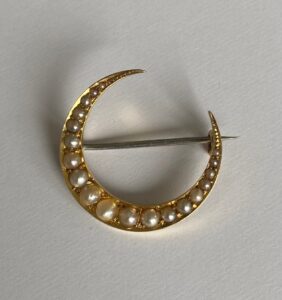
Victorian Crescent Moon Brooch with Inscription
Victorian Crescent Moon Brooch with Inscription 15ct Gold. From Anadej
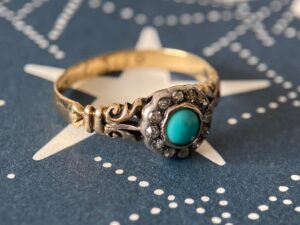
Victorian Turquoise and Rose Cut Diamond Ring
Victorian Turquoise and Rose Cut Diamond Ring. From Anadej

Gem Cutting Styles and Settings in Late Victorian or Aesthetic Period Jewellery

Gems were largely cut as above in Early and mid Victorian eras, with following addition.

  • old European cut – like the old mine cut, but rounder and with a smaller culet.

Women’s jewellery became much smaller and lighter during this period to fit in with their busier lifestyles, as women were increasingly at work and fighting for the right to vote.

Tiffany and Co made the solitaire ring popular during this time and the navette or marquise-shaped rings gained popularity too. Bracelets were often stacked and were usually thick and thin bangles stacking together for a wonderful clink! Necklaces took on a fringed/draped appearance, but earrings were usually studs, with the exception of dangles for evenings later in the period.

Another notable trend was for Mizpah jewellery, especially rings. Mizpah is from Hebrew and means ‘Watchtower’, but is commonly interpreted as ‘May God watch over you’.

The Art Nouveau period was gaining ground in France, with incredible designers like Lalique on the rise, more on this will be discussed in our next article on Art Nouveau Jewellery.

Popular Gemstones in Late Victorian or Aesthetic Period Jewellery

Moonstones, opals, amethyst, aquamarine, peridot, emerald, sapphires, rubies and chrysoberyl were commonly featured during this time.

Metals Used in Late Victorian or Aesthetic Period Jewellery

Silver, gold of all carats, rolled gold and now platinum was popular.

Further resources for Victorian Jewellery can be found here:

  • Language of Flowers
  • Sentimental Jewellery – Antique Jewels of Love and Sorrow, Ann Louise Luthi
  • Victorian Jewelry: Unexplored Treasures, Ginny Redington Dawes and Corinne Davidov

We hope you have enjoyed this article! We have a lovely range of Victorian jewellery with pieces from each of the eras noted and more are added on a regular basis as we find pieces we love and hope you will too. Please click here for our Victorian Rings, here for Victorian brooches or more widely Victorian Jewellery here.

Other Antique Jewellery Buyers Guides:

Georgian Jewellery

Art Nouveau Jewellery 

Edwardian Jewellery

Art Deco Jewellery


Posted on

Georgian Jewellery – A Buyers Guide

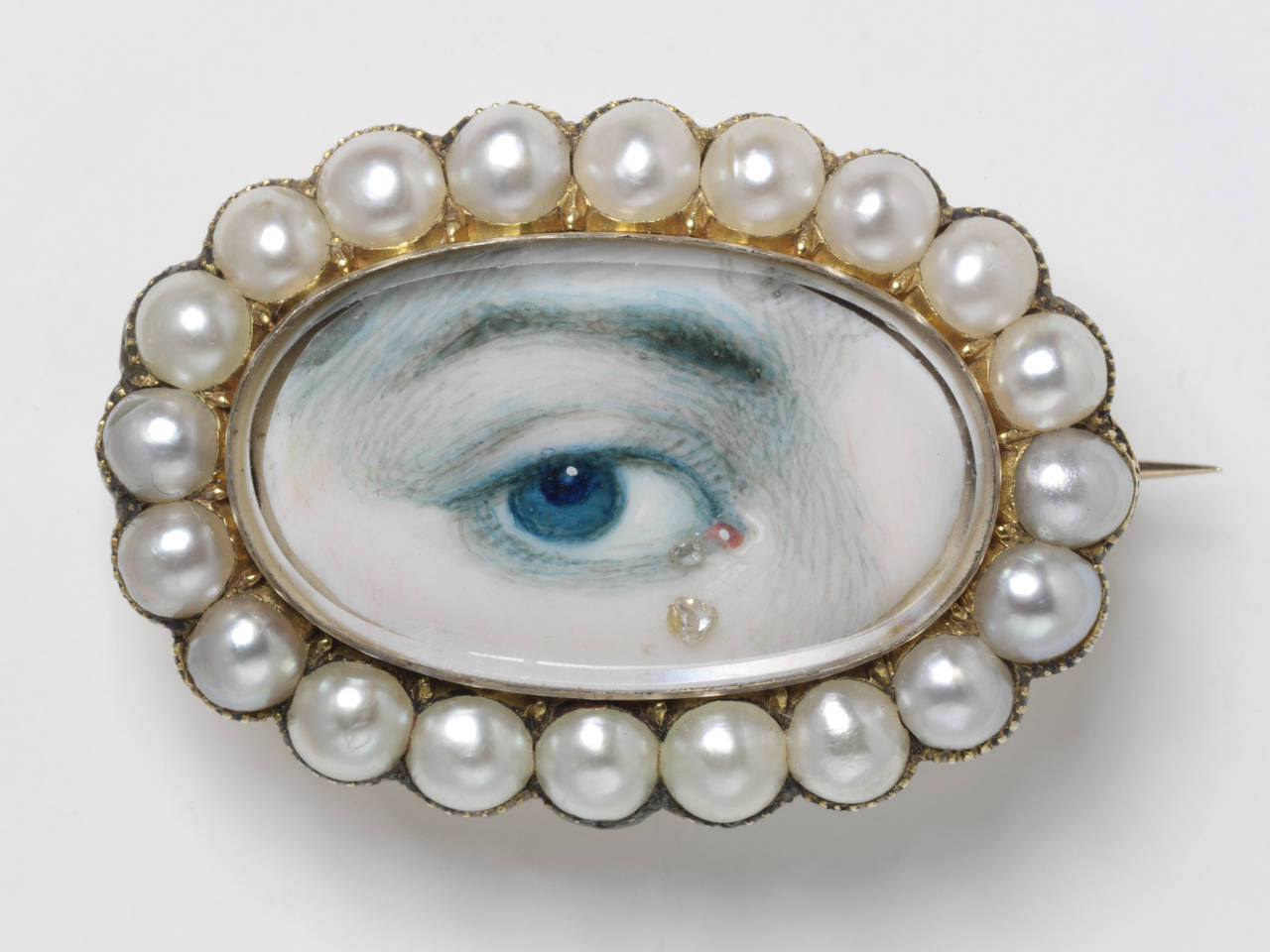
Lovers Eye at the Victoria and Albert Museum - Lot number p.56-1977

The Georgian Period (1700-1830)

The Georgian period was so named after the four King Georges who ruled in succession throughout this period. It was a prosperous and revolutionary time, particularly in politics, art and architecture, with many technological advancements happening at this time. There were huge developments in science and of course exploration. There was also a changing role for women in society. This all provided a great backdrop for developments in jewellery of the time.

It wasn’t just in Britain, where things were developing at pace and with politics running wild. For example, in America, George Washington was President, and it was a period marked by a Revolution. In France, Louis XVI and Marie Antoinette were at the helm during the French Revolution and Napoleon.  In Russia, Catherine the Great reigned.

For Georgian jewellery history, the period spanned from 1714 to 1830 and encompassed the reign of George I, George II, George III and George IV.

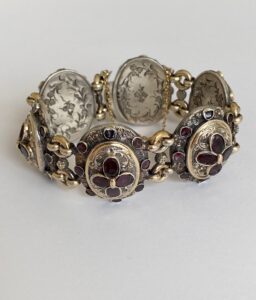
During the Georgian period, intricate metal work depicting natural themes came into fashion. This is called repoussé (an example of a repoussé bracelet is shown below). In addition, the use of faceted gemstones became all the rage.

Motifs and Symbolism in Georgian Jewellery

Flowers, butterflies, ribbons, and scrolls were popular motifs in Georgian jewellery. Sentimental jewellery like the ‘lover’s eye’ and also mourning jewellery was popular at this time. One of our favourites, acrostic jewellery (taking the first letter from popular gemstones to make a word, like regard, love, dearest) was also popular.

Gem Cutting Styles in Georgian Jewellery

Table cuts, rose cuts, and old mine cuts were the cuts of the day. Table cuts are not often seen on the market and have both a flat top and bottom and are either square or rectangular. Rose cuts have a flat bottom with a domed faceted top (fairly large facets, not always even). Old mine cuts are the most similar to today’s brilliant cut.

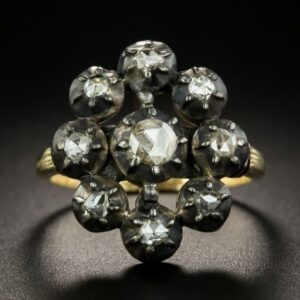
Georgian diamond rose cut cluster ring
Beautiful example of a Georgian Rose Cut Diamond Ring from Lang Antiques
Georgian Repoussé bracelet
Georgian Table-Cut Garnet Bracelet in Repousse style, with floral design to back. From Anadej

Popular Gemstones and Settings in Georgian Jewellery

The most popular ring stone in Georgian jewellery was the diamond, which was used almost exclusively up until 1750. Diamonds and white paste were more usually set in silver, or silver over 18ct or higher gold.

Garnets, emeralds, topaz and amber were also used. Georgian jewellery was mainly hand crafted and gems were often set in closed settings with foil backing for enhancement. The crimped collet setting as seen in the picture of the rose cut cluster ring from Lang Antiques was very popular at the time. Open settings had not become common during this period.

Paste (different types of cut glass, often coloured) was extremely popular in the 18th Century, as was enamel work.

Metals Used in Georgian Jewellery

Silver over 18 carat gold was often used to highlight colourless gems, e.g. diamonds and clear paste.  High carat gold was the order of the day especially 18 carat or  22 carat yellow gold. Instead of lower carat golds, pinchbeck (83% copper and 17% zinc) was used to give the appearance of gold.

Jewellery was often not hallmarked in the Georgian period as it was not a legal requirement to do so.

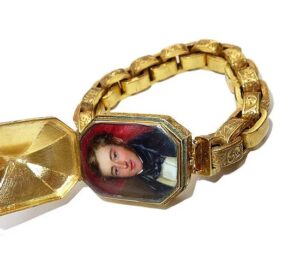
Rare Georgian Pinchbeck Locket Bracelet available at Antique Animal Jewelry
Beautiful example of a Georgian pinchbeck locket bracelet with a water colour of a gentleman inside. Available at Antique Animal Jewelry.
Georgian Jewellery
Georgian Mourning Ring for Josiah Wedgewood. Available to view at London’s Victoria and Albert Museum

Rarity and Resources for Georgian Jewellery

Rings from the Georgian Period are now exceedingly rare and there are many forgeries on the market, so special attention must be paid to the style and quality of the ring.

We don’t carry many Georgian pieces at Anadej; however, we would be delighted to help you search if you were after a special piece or suggest other antique jewellery specialists.

We can recommend Antique Animal Jewelry as they are Georgian Jewellery experts and carry a significant and incredible collection and have fascinating blogs on the subject.

A wonderful book full of fantastic information on Georgian Jewellery is: Georgian Jewellery: 1714-1830 by  Ginny Redington and Olivia Collings.

Other Antique Jewellery Buyers Guides:

Georgian Jewellery

Victorian Jewellery 

Art Nouveau Jewellery 

Edwardian Jewellery

Art Deco Jewellery