
The History of Gemstones: Origins, Symbolism, and Antique Jewellery
Gemstones are more than just beautiful adornments. Each stone carries a story and a journey through time that adds depth and meaning to the jewellery in which it is set. At Anadej, we believe that understanding the history of gemstones enriches the experience of wearing and collecting antique and vintage jewellery. From the ancient mines of Babylon to the vibrant Art Deco rings of the 1920s, gemstones have captured the imagination for thousands of years.
In this guide, we explore how gemstones were sourced, valued, and incorporated into jewellery across the centuries. Whether you are a seasoned collector or simply curious about the allure of precious stones, the history of gemstones is full of fascinating stories and remarkable craftsmanship.
Origins of Gemstones
The journey of gemstones begins deep within the earth. Rubies, sapphires, emeralds, and diamonds have been treasured since antiquity.
- Ancient Mines: India was the earliest known source of diamonds and sapphires (GIA), while Egypt provided some of the world’s first emeralds. Sri Lanka was famous for its rubies.
- Trade and Travel: Gems moved along trade routes across Asia and Europe, spreading their beauty and cultural significance.
- Symbolism: Gemstones often held spiritual or protective qualities. Emeralds symbolised fertility, rubies courage, and sapphires wisdom.
Gemstones as Amulets and Talismans
Jewellery with gemstones was often worn as amulets and talismans, believed to offer protection, promote health, or even attract love. This practice was popular throughout Persia, as well as in ancient Egypt, Greece, and Rome (British Museum).
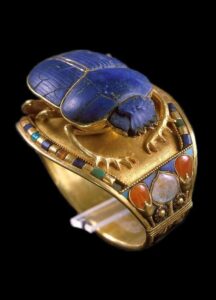
- Egypt: Amulets often represented animals, deities, symbols, or objects in miniature, frequently accentuated with gemstones such as turquoise, amethyst, lapis lazuli, and chalcedony. These stones were considered symbols of personality and spiritual protection.
- Greece: Greek jewellery frequently included references to Gods and Goddesses, and around 100 B.C., introduced cameos and intaglios carved from gemstones and semi-precious stones.
- Rome: Romans revered gemstones for their perceived spiritual powers and wore them in rings, pendants, and bracelets to harness these benefits.
More on the spiritual and symbolic significance of individual stones will be uncovered in our A–Z of Gemstones guide, which explores each gem in turn.
Uses of Gemstones in Jewellery
Gemstones have been used in jewellery for a myriad of reasons — primarily status, protection, and commitment.
- Status: One of the earliest reasons to wear gemstone jewellery was to demonstrate wealth and social position. In Europe, Sumptuary Laws were enacted in the 13th century to restrict fine jewellery to the upper classes and high-ranking church officials. These laws reflected both the exclusivity of gemstones and the social shifts created by the Crusades, which brought rare gems and luxury goods from distant lands into circulation.
- Amulets: As mentioned above, gemstones often carried symbolic or protective power.
- Commitment: Gemstones were, and still are, a popular choice for gifts and engagement jewellery, symbolising love, loyalty, and enduring bonds.
 Elizabethan Suptuary Laws – Rules for Dressing
Gemstones in Historic Jewellery
Over the centuries, gemstones have influenced jewellery design in remarkable ways. Each era has its own distinctive style, which collectors can explore through our carefully curated shop categories:
- Georgian Jewellery (1714–1837) – Delicate goldwork with carefully chosen coloured gemstones, often set with symbolic motifs (Victoria and Albert Museum).
- Victorian Jewellery (1837–1901) – Romantic and sentimental designs; mourning jewellery often included black onyx, garnet, or jet.
- Edwardian Jewellery (1901–1914) – Platinum and diamonds created refined, lace-like elegance.
- Art Nouveau Jewellery (1890–1910) – Nature-inspired, flowing designs paired gemstones with enamel in imaginative compositions.
- Art Deco Jewellery (1920–1940) – Bold geometry, strong colour contrasts, and vibrant gemstones defined this era.
- Retro & Vintage Jewellery (1940s–1990s) – Statement pieces featuring sculptural gold and large, eye-catching gemstones reflected post-war glamour.
Each era tells a story through its gemstones and design — exploring these categories can help you find pieces that resonate with both history and style.
Gemstone Sources Through History
Certain regions became synonymous with gemstone quality (Smithsonian Institution, American Museum of Natural History):
- India: Early diamonds and sapphires
- Colombia: Emeralds prized by European nobility
- Sri Lanka: Rubies and sapphires treasured for centuries
- Brazil & Africa: Important sources of diamonds and coloured gemstones in the 19th and 20th centuries
Gemstones in Antique and Vintage Jewellery Today
Knowing a gemstone’s history can enhance your appreciation of antique jewellery. It helps you understand period-specific cuts and settings, the symbolic meanings of colours, and why certain stones were favoured in particular eras. A garnet might symbolise friendship, a sapphire loyalty, and a ruby passion.
Discover how these stones were used across different eras in our A–Z of Gemstones guide, which helps you identify, care for, and appreciate each gem.
Caring for Historical Gemstones
Antique and vintage gemstones require careful attention to preserve their beauty and value:
- Clean carefully: Hard gemstones like diamonds, sapphires, and rubies can be gently cleaned with mild soap and water. Softer or porous stones such as turquoise, opal, coral, and pearls should avoid prolonged exposure to water or harsh chemicals. Instead, wipe them gently with a soft, dry cloth.
- Check settings regularly: Have delicate or intricate pieces inspected by a jeweller to ensure stones are secure.
- Store properly: Keep pieces individually in soft pouches or lined boxes to prevent scratches and tangling.
- Avoid extreme conditions: Protect gemstones from high heat, direct sunlight, and chemicals that could alter colour or structure.
- Consider insurance: Cover rare or valuable pieces for peace of mind.
FAQ: History of Gemstones
What is the oldest gemstone used in jewellery?
Diamonds and sapphires have been used for more than 3,000 years, with early sources in India.
Why were certain gemstones popular in specific eras?
Trends often reflected availability, fashion, and symbolism. Edwardian jewellery favoured platinum and diamonds, while Art Deco designers loved bold contrasts of sapphires and rubies.
How do I identify gemstones in antique jewellery?
Look for era-specific cuts, hallmarks, and craftsmanship. Our A–Z of Gemstones is a useful resource for identification.
Discover Our Gemstone Jewellery Collection
At Anadej, every gemstone tells a story. Browse our carefully curated antique and vintage jewellery collection to find rings, necklaces, brooches, and charms that combine history, beauty, and individuality. Each piece carries the legacy of its era into the present day. Browse our collection here:
Resources for the history of gemstones and their uses
Books:
- Jewelry: From Antiquity to the Present – Clare Phillips
- Jewels & Jewellery – Clare Phillips
- A History of Jewellery, 110-1870 – Joan Evans
- The History of Jewelry: Joseph Saidian & Sons – Caroline Childers
Online resources:
- Gemological Institute of America – Gemstones
- British Museum – Jewellery and Gemstones
- Victoria and Albert Museum – Jewellery Through the Ages
- Gemstone Discoveries
- European Jewellery History
- Gem Society